

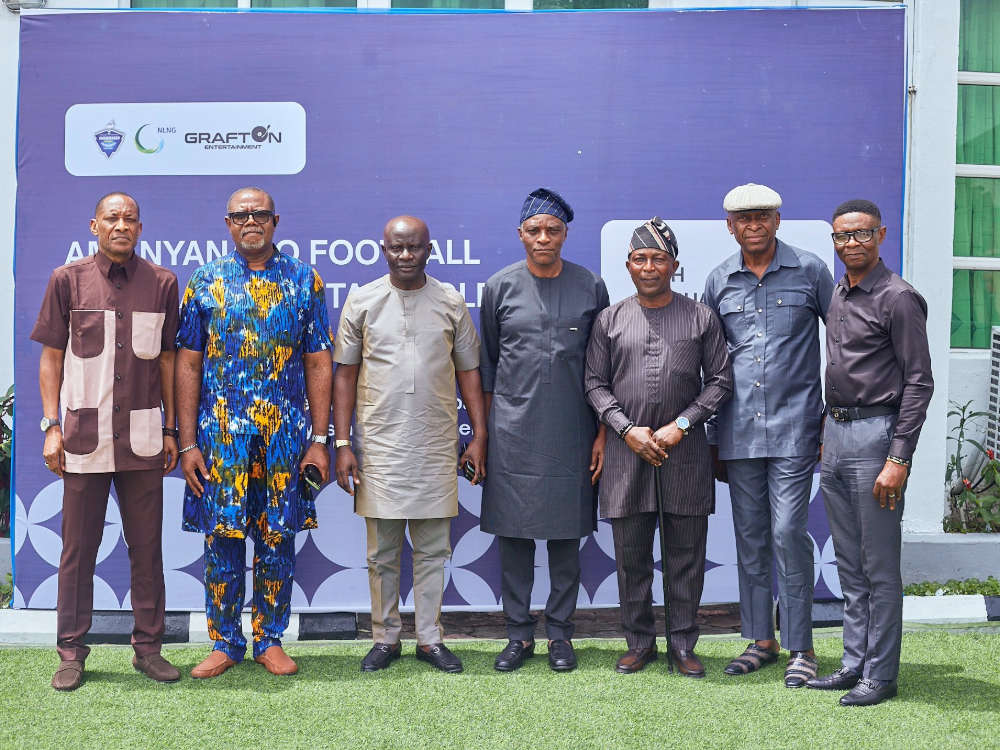
Football stakeholders have called for the establishment of a structured system to support long-term football development in Bonny Island, stressing that the community must move beyond the Amanyanabo Football Tournament to a more institutionalised framework.
The call was made during the Amanyanabo Football Tournament Stakeholders Forum, with the theme ‘Building a sustainable future for football development in Bonny Island’s next generation.’ In line with the theme, experts presented strategies for building a sustainable future for the next generation of footballers on the island.
Speaking at the forum, sports development advocate Olisemeka Obi presented a blueprint entitled ‘Building a Sustainable Framework for Football Development in Bonny Island.’ Obi noted that while Bonny already boasts of a functional football field, an active youth population, the well-known Amanyanabo Cup competition, and growing corporate interest, these assets must be transformed into a coordinated development system.
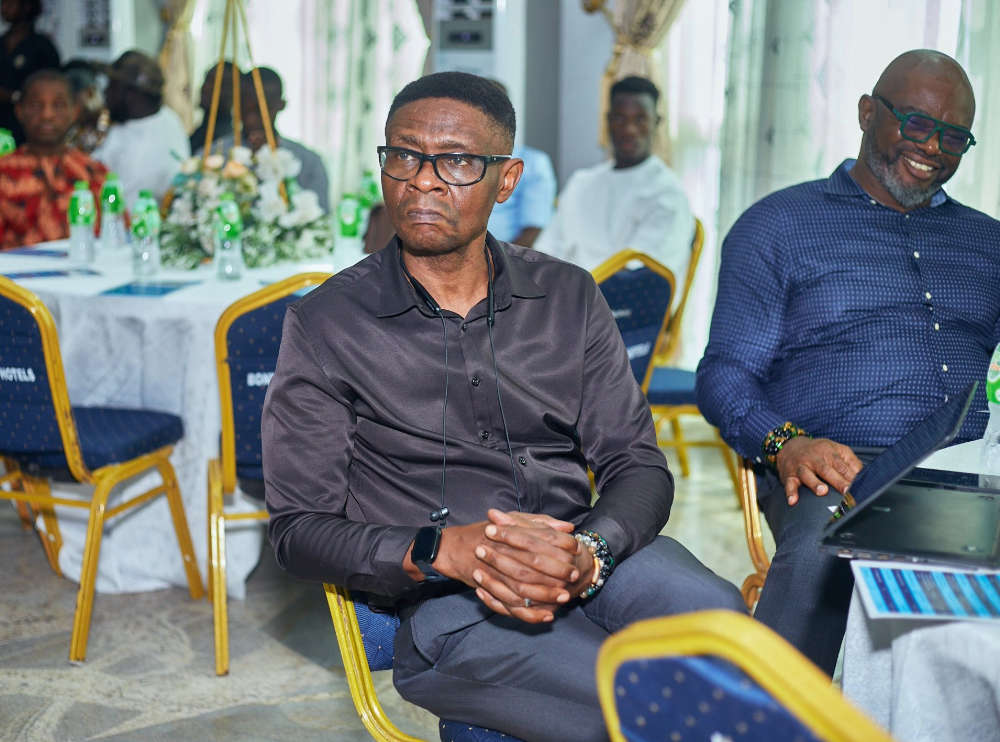
Sports development advocate, Olisemeka Obi
He explained that football development goes beyond simply organising competitions, describing it as the long-term improvement of players, clubs and institutions through grassroots football, coaching education, talent pathways, infrastructure and governance. According to him, development must work alongside football promotion, which focuses on visibility through media coverage, branding, sponsorships and fan engagement.
The blueprint identified four major pillars necessary for football sustainability in Bonny Island: coaches’ development, integration of football with education, employment and economic value, and strong corporate governance.
Under coaches’ development, Obi highlighted the need for annual training and certification programmes, mentorship systems and structured opportunities for practical coaching experience, noting that most local coaching structures remain informal.
He also stressed the importance of linking football with education through policies such as a ‘No Grades, No Play’ rule, school partnerships, scholarship opportunities for talented players and academic mentorship programmes.
The proposal further outlined the economic potential of football, noting that the sport can generate both direct jobs, such as players, coaches, referees, administrators and sports doctors, and indirect employment including vendors, media personnel, security staff and sports equipment sellers.
Obi said transforming the Amanyanabo football competition into a structured football brand could help create an entire sports ecosystem within the community.
To ensure transparency and accountability, the presentation also recommended the establishment of a Bonny Football Development Board operating in line with the framework of the Nigeria Football Federation, with a written constitution, transparent leadership and annual audited reports.
The blueprint also proposed a five-year roadmap for implementation. The first year would focus on forming the development board and initiating coaching training programmes, followed by the establishment of structured youth leagues for under-13, under-17 and under-21 players in the second and third years.
By the fourth year, the plan envisions expansion through corporate partnerships, while the fifth year would focus on creating professional pathways for talented players and achieving financial sustainability.
Similarly, football coach Eldred Sunju-Abbey, founder and president of African Coaches Connect, highlighted cultural and psychological challenges faced by young players from Bonny who pursue careers in major Nigerian cities and Europe.
Presenting a paper on ‘Navigating Cultural Currents: Adaptation Paradigms for Young Footballers from Bonny Island,’ Sunju-Abbey explained that players moving abroad often encounter language barriers, unfamiliar social structures, changes in climate and diet, and more demanding training schedules.
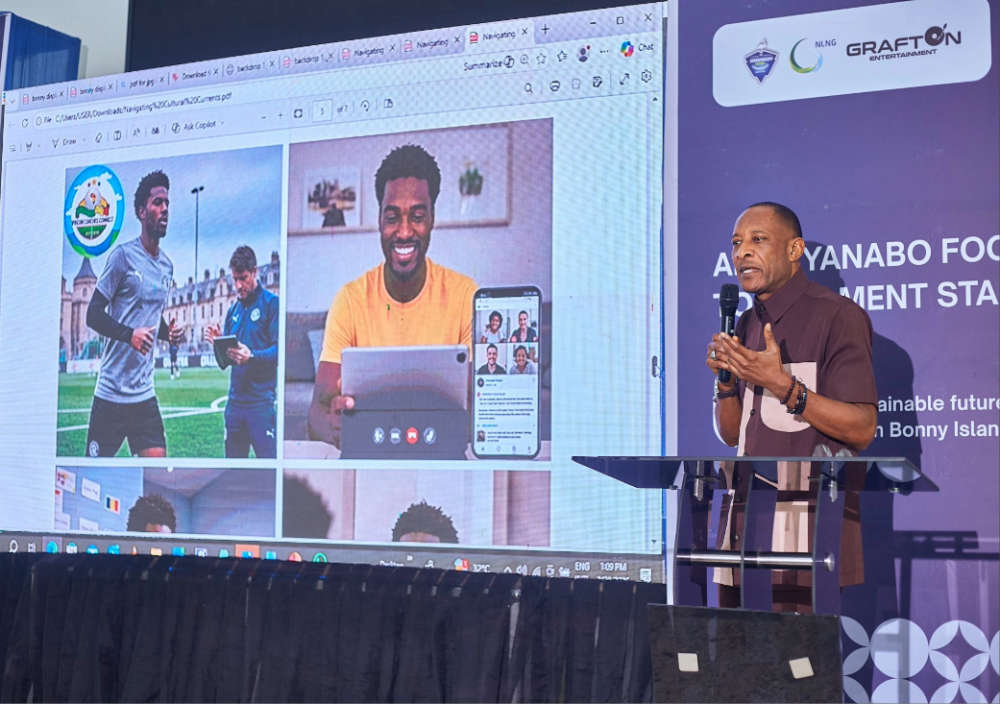
Coach Eldred Sunju-Abbey
Even within Nigeria, he noted, players relocating from Bonny to urban centres must adjust to a faster-paced environment and a more diverse social setting.
He therefore called for stronger support systems including mentorship programmes, culturally informed coaching and accessible sports psychology to help young players transition successfully.
Also presenting at the forum, Coach Caleb Esu delivered a paper entitled ‘Identifying and Nurturing Talents in Bonny Island.’ In an interview with our correspondent, Esu described the forum as an important innovation for the island’s football future.
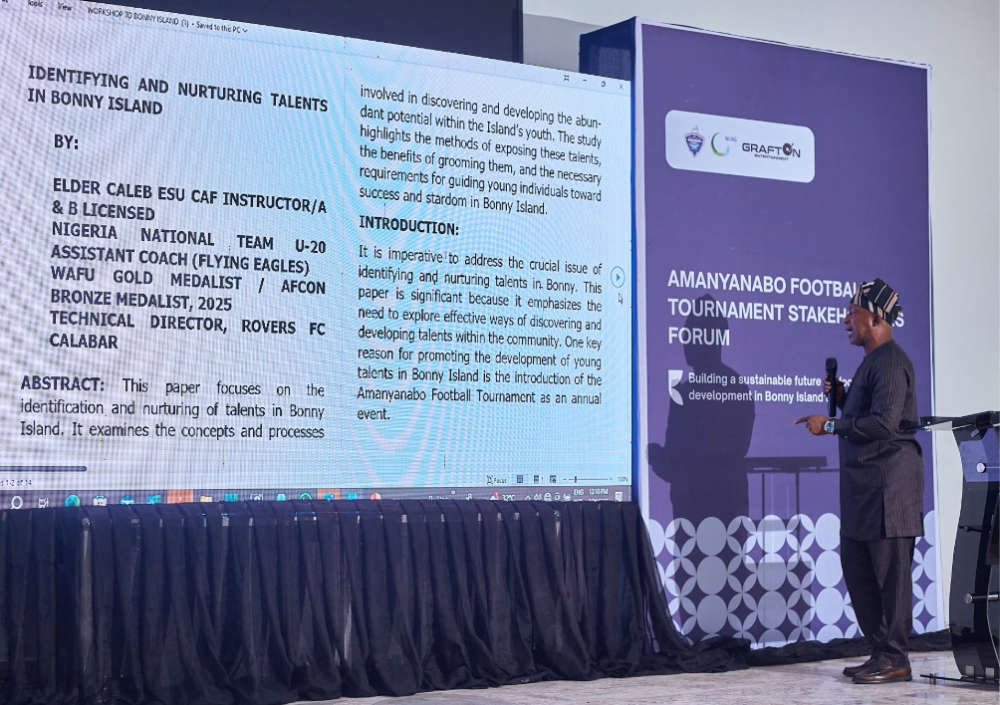
Coach Caleb Esu
“This is one of the innovations that we have been looking for, whereby a small island will now decide to focus more on their youth playing football, possibly to take it to the highest peak.
This has gone a long way in improving the lot of those who have the passion for football and the players themselves. It's to make sure such talents are not allowed to waste, giving them the boost by getting them good agents and managers and possibly the aspect of sponsorship that harnesses this programme,” he said.
On his part, Nigeria LNG’s General Manager, Production, Nnamdi Anowi, said the Amanyanabo football competition should be viewed beyond match days. The GM, on behalf of the tournament sponsor, stressed that a broader football ecosystem must work together to prepare local talents for national and international exposure.
“The tournament is just what you see, but there is a lot of work that needs to be done before that tournament so that we can showcase the best talent that we have and people can come from overseas, nationally, and pick those talents.”
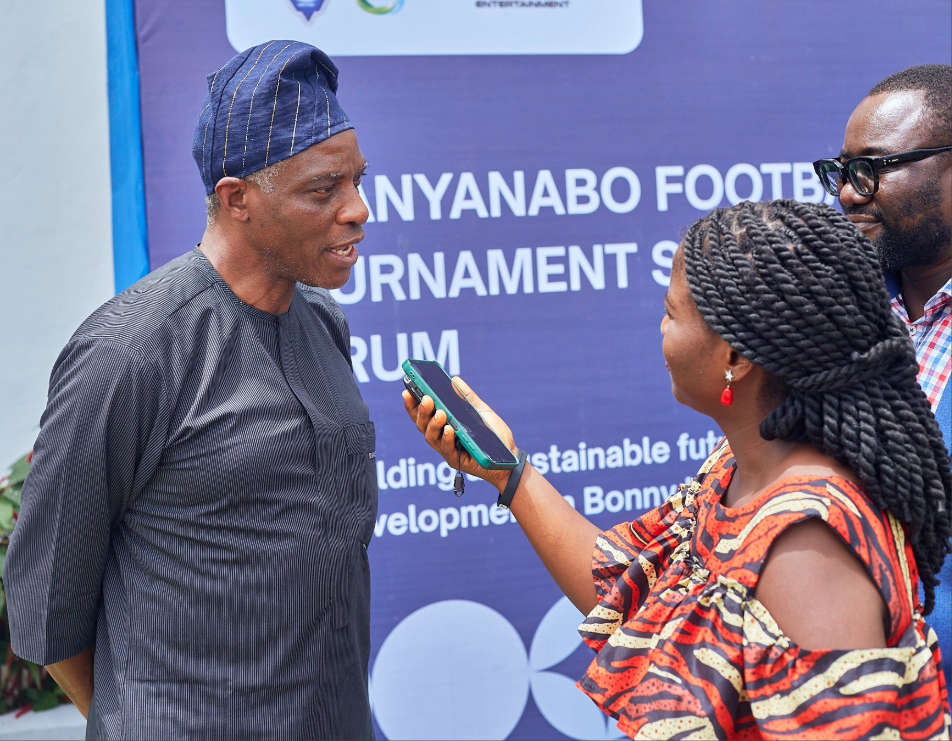
Nigeria LNG’s General Manager, Production, Nnamdi Anowi being interviewed
Responding to a follow-up question on who should drive the process, Anowi said the responsibility must be shared.
“Stakeholders, coaches, referees, the FA, other companies who are on the island—we need to all contribute. We are bringing in football experts also to make their contribution. It is the whole community that trains human resources. So it is the football ecosystem that does that work. Ours is to make our own contribution and sponsor each other,” he added.
According to the organiser of the forum and Chief Executive Officer of Grafton Entertainment, Amasenibo Tonye Ibiama, the forum was designed to help stakeholders see the competition as more than a trophy contest, and to inspire new perspectives about the future direction of football in Bonny.
“This forum is to basically get the stakeholders involved in football in the kingdom to look at the tournament we organise not just as a trophy or cash prize competition, but also as a place to develop talent.
We are looking inwards beyond the competition or the funfair you see every single time we play, but also how we can develop young players in the next competition,” he stressed.
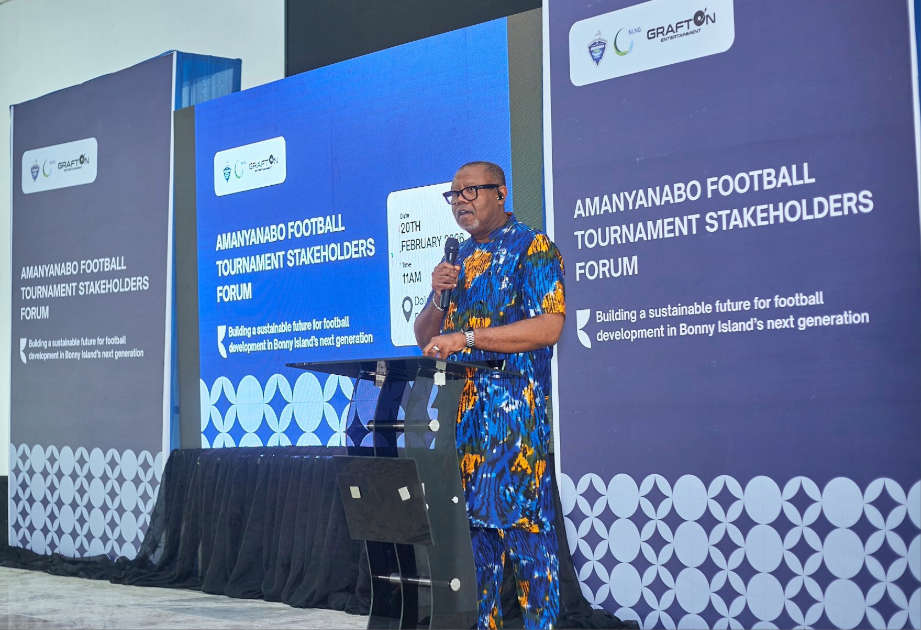
Organiser of the forum and Chief Executive Officer of Grafton Entertainment, Amasenibo Tonye Ibiama
Participants at the forum, including coaches and players, welcomed the initiative and expressed hope that the programme would be sustained as a platform to improve the capacity of coaches to identify and groom young talents.
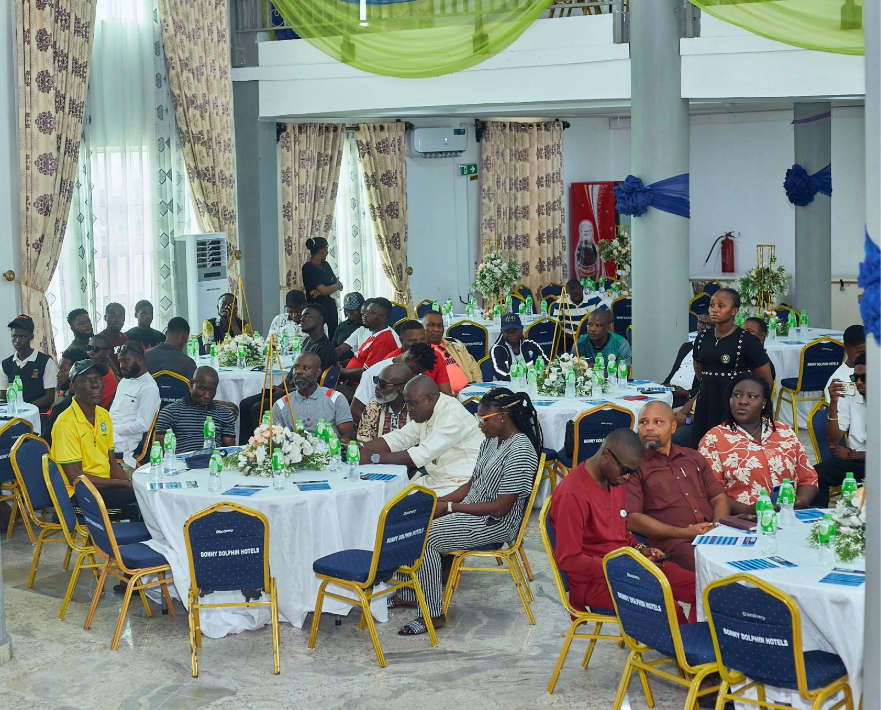
A cross section of guests and participants
One coach described the initiative as a significant step forward.
“It's a welcome development. We have never had it like this before, where we have professionals to teach the coaches in the island on how to better groom players,” he said.
“Over the years, I think coaches needed a platform where they can learn, grow on how to develop players, how to groom players, how to identify talents in football. With this program, the orientation here is very, very impactful,” another participant added.
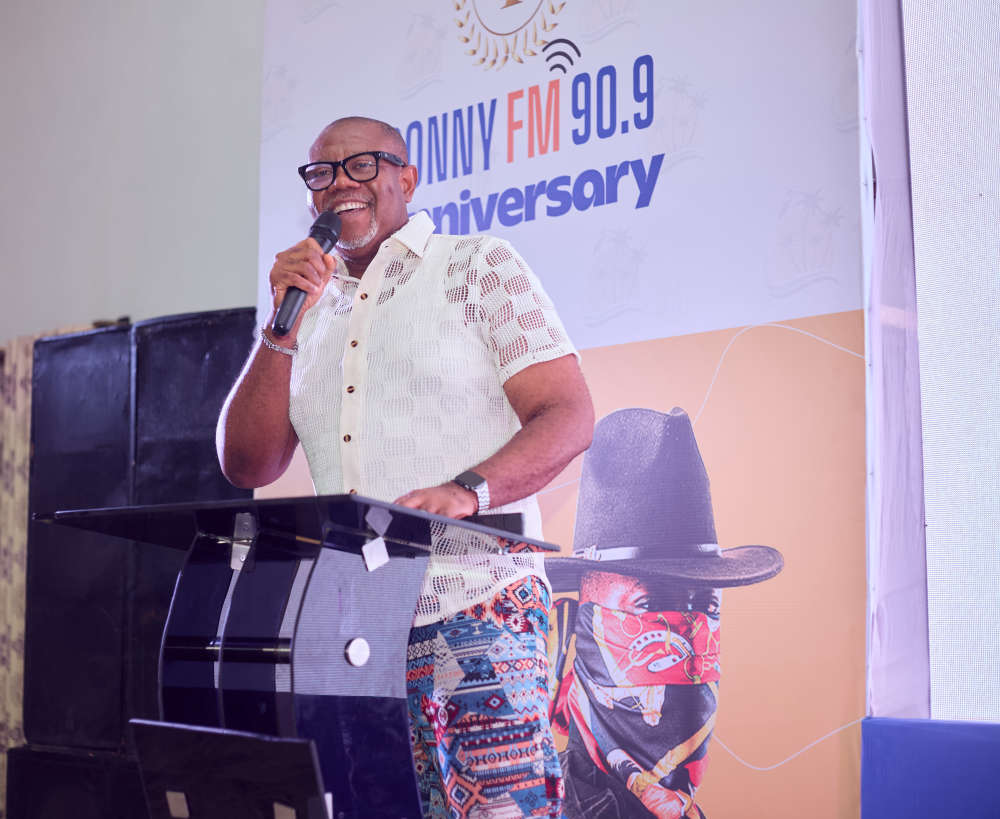 Stakeholders Commend Bonny FM as Station Marks First Anniversary
 Successful Delivery of Quadruplets Sparks Joy in Bonny Island
 Education in Mother Tongue Improves Learning Outcomes - Kari
 NOA Calls for Urgent Security Action to forestall Ethnic tensions in Rivers State
 Parents Question Variation in WAEC and NECO Registration Fees in Rivers State
 Bodo–Bonny Road: A lifeline for many, a lifeline lost for others
Comments
Add a comment